
Jordan Hartmann · 5 October 2026
The Interplay of Scalp Microbiome Diversity and Smoothing Treatment Durability in Urban Environments
Urban environments present distinct challenges for scalp health because air pollution, particulate matter, and fluctuating humidity levels interact directly with the scalp microbiome, and these interactions in turn affect how long hair smoothing treatments maintain their effects. Researchers have documented that microbial communities on the scalp shift in composition when exposed to higher concentrations of nitrogen dioxide and fine particles common in city air, which reduces overall diversity and alters the balance of bacteria and fungi that normally support hair structure.
Scalp Microbiome Basics and Environmental Influences
The scalp hosts a complex ecosystem of microorganisms whose diversity supports barrier function and sebum regulation, yet studies indicate that city dwellers experience measurable declines in species richness compared with rural populations. Data collected across multiple metropolitan areas reveal that daily exposure to traffic emissions correlates with lower counts of beneficial Staphylococcus and Cutibacterium strains, while opportunistic species increase. These changes matter because smoothing treatments rely on a stable scalp surface to bond keratin proteins effectively, and diminished microbial diversity can accelerate product breakdown over weeks rather than months.
Urban Factors That Shape Microbial Communities
Particulate matter from vehicle exhaust and industrial sources settles on hair and scalp, creating a microenvironment that favors certain microbes while suppressing others, according to findings from the European Environment Agency on urban air quality impacts. In October 2026, ongoing monitoring programs in several European cities reported seasonal spikes in ozone levels that further stressed scalp flora, leading to faster degradation of chemical bonds formed during smoothing procedures. Humidity variations inside buildings and on streets compound the issue, since rapid shifts encourage microbial imbalance that interferes with the cuticle sealing achieved by professional treatments.
How Smoothing Treatments Depend on Scalp Conditions
Smoothing formulations work by penetrating the hair shaft and forming new cross-links, yet their longevity hinges on the scalp's ability to maintain an optimal pH and moisture balance that microbial activity helps regulate. When diversity drops, sebum composition changes and scalp inflammation rises subtly, both of which researchers link to earlier lifting of treated strands. Observers note that individuals living in high-density districts often require touch-up appointments several weeks sooner than those in less polluted zones, based on longitudinal tracking of treatment outcomes.
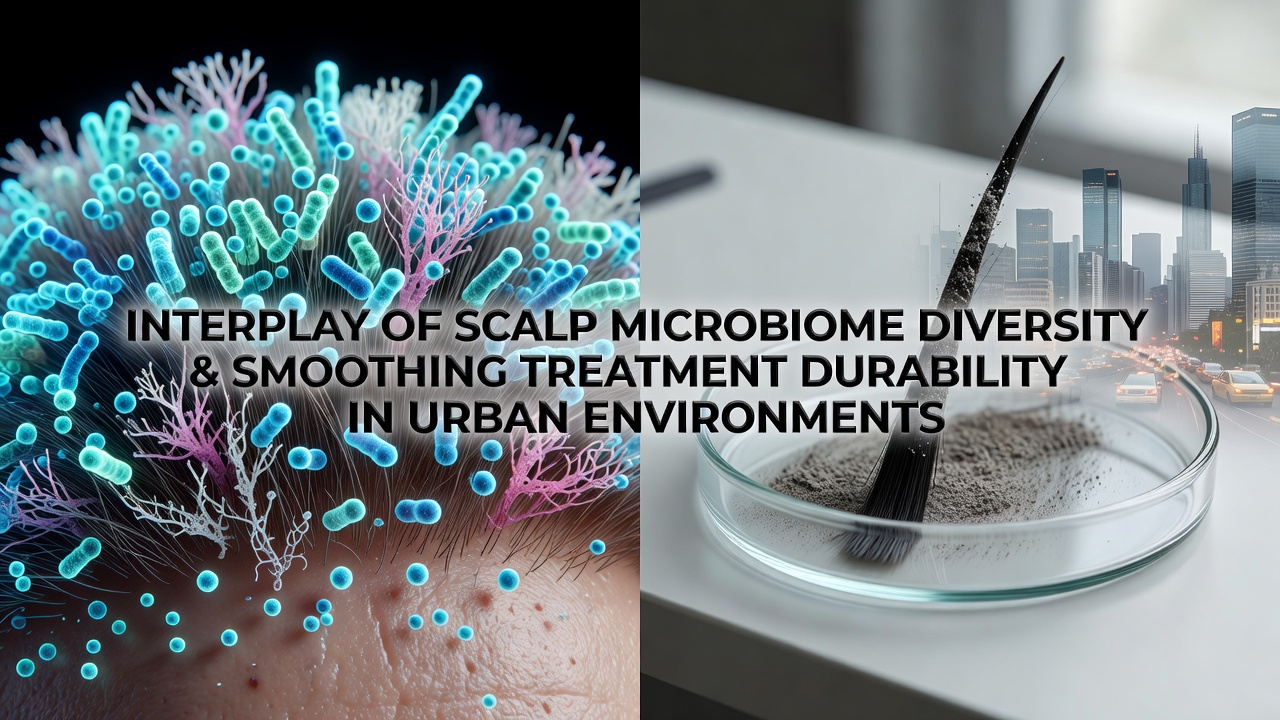
One study conducted in North American cities tracked participants who received identical smoothing services and found that those with lower baseline microbial diversity retained straightness for an average of 42 days fewer. The same research highlighted that protective scalp routines aimed at restoring diversity, such as targeted prebiotic applications, extended durability without altering the original treatment chemistry.
Research Findings on Durability Variations
Evidence gathered by Health Canada through urban health surveys demonstrates that residents in areas with elevated fine-particle counts show accelerated return of natural curl patterns after smoothing, pointing to microbiome-mediated effects on protein stability. Parallel investigations in Australian metropolitan centers reached similar conclusions, noting that microbial diversity indices above a certain threshold predicted longer treatment retention regardless of hair type or product brand used. These patterns hold after controlling for washing frequency and styling habits, underscoring the microbiome's independent role.
Strategies Observed in Practice
Clinics in dense urban areas have begun incorporating microbiome assessments before smoothing sessions, allowing technicians to recommend preparatory steps that support microbial balance. Data indicate that consistent use of gentle, non-antimicrobial cleansers correlates with preserved diversity and, by extension, extended treatment life. People in these settings also report adjusting appointment intervals based on local air-quality reports rather than fixed schedules, aligning maintenance with environmental conditions that influence scalp flora.
Conclusion
Collective evidence establishes clear connections between reduced scalp microbiome diversity in urban settings and shorter durations of smoothing treatment effects, driven by pollution-driven microbial shifts and their downstream impact on hair protein integrity. Continued monitoring and region-specific data collection will refine understanding of these relationships as cities evolve and new treatment formulations emerge.