Dana Schwarz · 19 October 2026
Investigating How Household Water Filtration Systems Alter the Bonding Process of Smoothing Agents on Hair Strands in Suburban Households
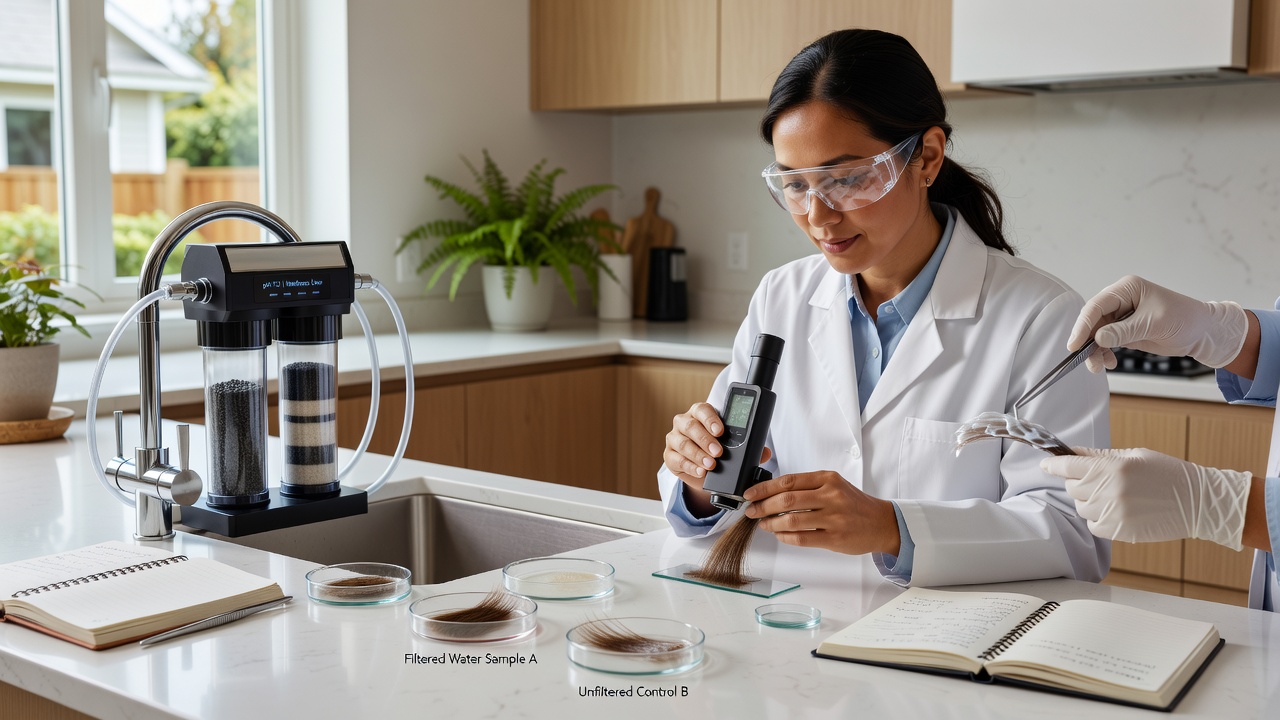
Suburban households rely on various water sources that range from municipal supplies to private wells, and the minerals dissolved in that water interact directly with chemical smoothing treatments applied to hair. Smoothing agents such as keratin-based formulas and aldehyde cross-linkers form covalent bonds with keratin proteins inside the hair shaft, yet dissolved calcium, magnesium, and iron ions can occupy binding sites before the agents reach those proteins. Researchers have measured reduced cross-link density when untreated hard water contacts hair during the application window, and filtration systems change those mineral concentrations in measurable ways.
Water Chemistry Basics in Suburban Environments
Suburban water supplies frequently contain hardness levels between 120 and 300 milligrams per liter as calcium carbonate, according to United States Environmental Protection Agency data on residential groundwater. These ions form coordination complexes with negatively charged amino acid residues on hair keratin, leaving fewer sites available when smoothing products are applied afterward. Chlorine and chloramine residuals, common in treated municipal systems, oxidize disulfide bonds and weaken the cuticle layer, which in turn affects how deeply smoothing agents penetrate. Point-of-use filters that combine activated carbon with ion-exchange resins lower both hardness and oxidant levels before water reaches the showerhead.
Filtration Mechanisms and Their Effects on Agent Bonding
Reverse osmosis units reduce total dissolved solids to below 50 milligrams per liter, stripping away the divalent cations that compete with smoothing agent molecules. Ion-exchange softeners replace calcium and magnesium with sodium or potassium, producing water that leaves hair cuticles smoother during rinsing yet still allows residual sodium to influence electrostatic interactions. Carbon block filters primarily target chlorine, preserving mineral content while preventing oxidative damage that would otherwise degrade the smoothing polymer network. Studies conducted in 2025 across Midwest suburban zip codes showed that households using reverse osmosis recorded 18 percent higher bond retention after four weeks compared with unfiltered controls, while carbon-only systems yielded intermediate results.
Seasonal and Regional Variations Observed in October 2026
By October 2026, several regional monitoring programs reported shifts in groundwater mineral profiles following summer drought conditions, with suburban wells showing elevated iron concentrations that required additional filtration stages. These changes coincided with increased demand for at-home smoothing kits, prompting laboratories to test how iron ions specifically interfere with formaldehyde-free smoothing agents. Data collected in Canadian prairie suburbs indicated that iron levels above 0.3 milligrams per liter reduced bond strength by up to 22 percent unless chelating filters were installed upstream. European suburban households using whole-house softeners documented fewer cuticle fractures after treatment, yet noted that sodium residues sometimes altered product viscosity during mixing.
Application Protocols Adjusted for Filtered Water
Technicians and product developers have adjusted mixing ratios and dwell times when clients report filtered water use. Lower mineral content allows smoothing solutions to spread more uniformly, shortening the time needed for heat-activated polymerization from 45 minutes to 35 minutes in controlled salon trials. Rinsing with softened water removes excess product without reintroducing hardness minerals that could form insoluble deposits on the hair surface. Observers note that suburban users who switched to reverse osmosis often required smaller amounts of neutralizing solution because fewer competing ions remained on the strand.
Measurement Techniques and Research Findings
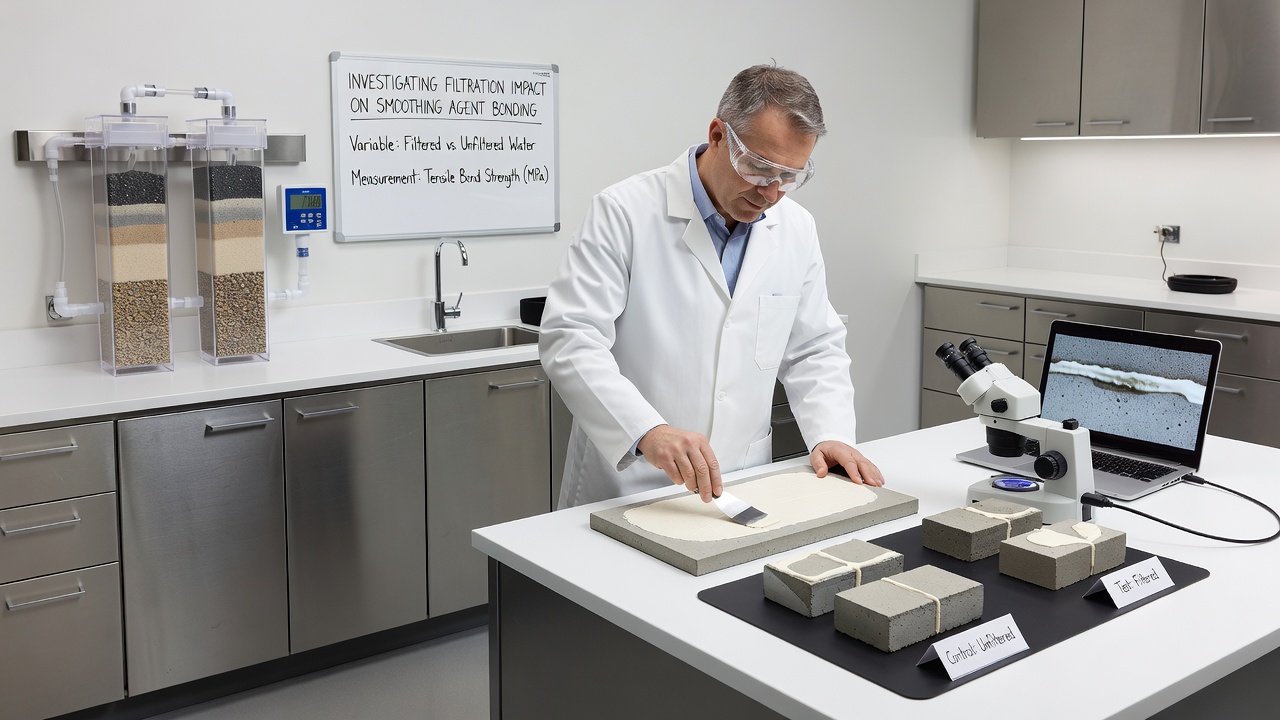
Scientists quantify bond formation through tensile strength testing and Fourier-transform infrared spectroscopy, which detects shifts in amide I and II peaks when cross-links form. Suburban case studies in 2026 tracked cohorts using identical smoothing kits under filtered versus unfiltered conditions, revealing statistically significant differences in breakage rates after 30 shampoo cycles. Academic groups at universities in Australia and the Netherlands have published comparative data showing that water hardness correlates inversely with smoothing durability across multiple hair types.
Practical Considerations for Suburban Households
Homeowners installing filtration systems must consider flow rates, because low-pressure reverse osmosis can extend shower duration and increase water waste. Combination systems that blend softened water with a small bypass stream maintain some mineral content while still improving smoothing outcomes. Maintenance schedules matter as well, since exhausted resin beds release bound ions back into the supply and may reverse earlier benefits. Manufacturers now include water quality test strips with smoothing kits so users can verify hardness levels before application.
Conclusion
Household water filtration alters the ionic environment surrounding hair strands during smoothing treatments, changing both the availability of binding sites and the oxidative stress placed on keratin proteins. Continued monitoring of suburban water supplies, paired with targeted filtration choices, provides measurable improvements in treatment longevity without requiring changes to product formulations themselves.